

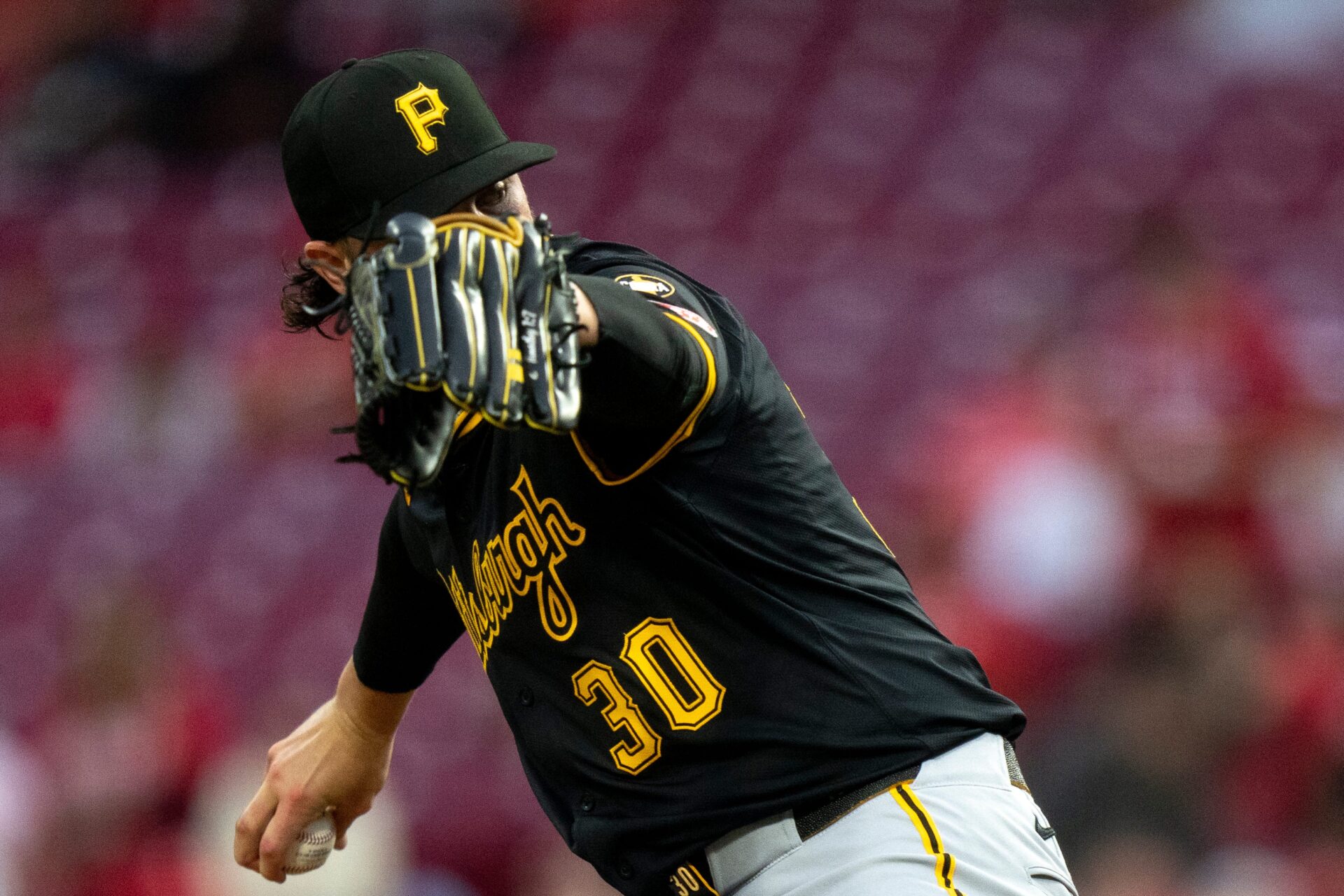
Paul Skenes arrived at Pirate City last week looking like the same relentlessly focused pitcher who dominated the National League in 2025. He reported early, threw a bullpen session before full-squad workouts began, and told reporters his plan for the season was simple: refine what already works.
But 1,100 miles away in Arizona, a three-person arbitration panel had just detonated a financial earthquake that will reverberate all the way to Pittsburgh’s front office. Tarik Skubal, the two-time American League Cy Young winner, won his arbitration case against the Detroit Tigers on Feb. 6, securing a record-shattering $32 million salary. The Pirates can no longer pretend the math will work out.
The Arbitration Bomb That Changed Everything
The Skubal ruling wasn’t just a personal victory for the Tigers ace. It was a line in the sand for every small-market team with a homegrown star pitcher. The $13 million gap between Skubal’s ask and Detroit’s $19 million offer was the largest in arbitration history, and the panel sided with the player, obliterating David Price’s $19.75 million record for pitchers set in 2015.
What made Skubal’s case transformative was his invocation of a rarely used CBA provision allowing players with five-plus years of service and “special accomplishment” to compare themselves not just to arbitration-eligible players, but to free agents.
Scott Boras built Skubal’s argument around salaries of top free-agent starters exceeding $40 million, including deals like Zack Wheeler’s $42 million average annual value with the Philadelphia Phillies. The panel agreed.
Skenes, who sits alongside Skubal on the MLBPA’s eight-member executive subcommittee, doesn’t need anyone to explain the implications. He reaches arbitration eligibility after the 2026 season, with his first arbitration year in 2027, and if he continues pitching like the best pitcher in baseball, his third and final arbitration year in 2029 could dwarf Skubal’s $32 million.
Pittsburgh Post-Gazette reporter Noah Hiles laid out the nightmare scenario on 93.7 The Fan last week. “If he never has a bad year, if he keeps doing what he’s doing now, and he gets into arb-two, he’s probably going to demand north of $32 million,” Hiles said. “He may demand as much as close to $40 million. The Pirates are just not going to pay that. I don’t care if there is a salary cap or whatever. It’s just not happening.”
The Pirates have never paid $32 million to a single player. Their 2026 payroll has exceeded $100 million for the first time in franchise history following offseason acquisitions, though it still ranks among the lowest in baseball.
Mitch Keller’s approximately $16.9 million salary is the highest on the roster. Bryan Reynolds’ eight-year, $106.75 million extension represents the largest contract in franchise history. The idea of Pittsburgh committing $40 million to one pitcher while fielding a competitive supporting cast under owner Bob Nutting strains credulity.
The Three-Year Window
The financial trajectory is clear. Skubal made $2.65 million in his first arbitration year, $10.15 million in his second, then $32 million in his third. Skenes, who already has both the NL Rookie of the Year and NL Cy Young trophies, will likely eclipse those numbers at every step.
Manager Don Kelly, entering his first full season, understands what he has. “I think the thing that stands out with Paul is his consistency, the way that he approaches every single day,” Kelly said at the first spring training workout. “He’s always striving to get better. He doesn’t want to be good, he wants to be great.”
Skenes, true to form, deflected any conversation about individual goals. When asked about his plans for 2026, his answer was two words: “Make the playoffs.” He’s not adding new pitches this spring, not chasing velocity, not experimenting with a slower sweeper or a cutter. His focus is refinement, command, and deception.
“There’s nothing stopping us from being, call it whatever you want, the best group we can be, the best group in baseball,” Skenes told reporters. “The only thing that’s going to get in our way is ourselves.”
The current CBA expires Dec. 1, 2026. A lockout appears increasingly likely for 2027, which happens to be Skenes’ first arbitration year. If the season is delayed or canceled, the Pirates’ window to contend around their franchise ace tightens further. Hiles suggested on the radio that 2026 could be Skenes’ last full season in a Pirates uniform.
Pittsburgh’s front office spent the winter trying to maximize the window they know is closing. Brandon Lowe, Ryan O’Hearn, and Marcell Ozuna combined for 69 home runs last season. Gregory Soto and José Urquidy bolster a pitching staff that recorded 19 shutouts in 2025, the most in the majors. The urgency is palpable.
But for all the offseason acquisitions, the calculus remains brutal. The Pirates cannot outrun arbitration economics. Skenes will eventually command more money than this franchise has ever committed to a single player, likely before he even reaches free agency. The Skubal ruling didn’t create that reality. It just made ignoring it impossible.