
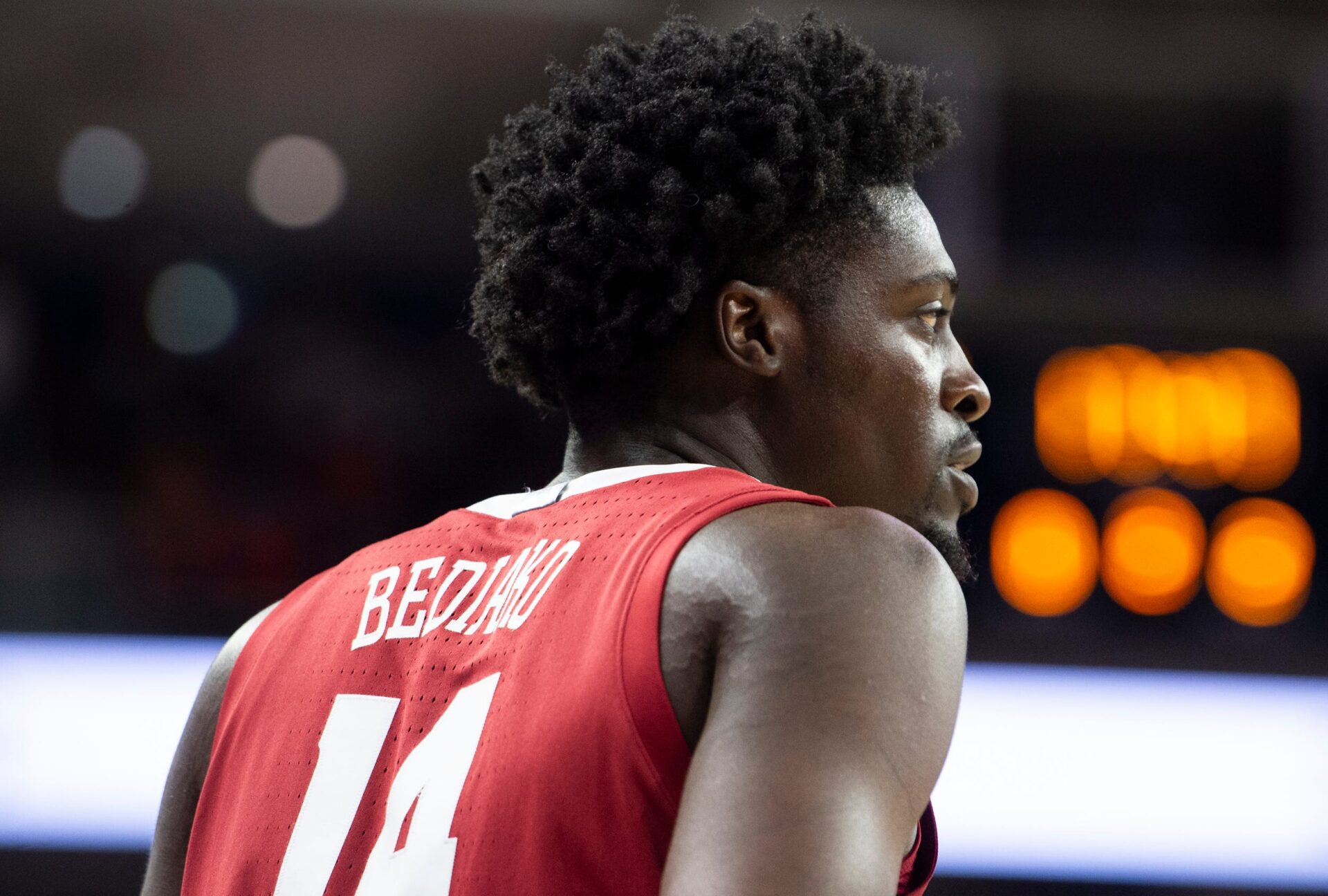
Charles Bediako’s college basketball career ended for the second time Monday, but the aftershocks will ripple through March Madness. A Tuscaloosa County judge denied the 7-foot center’s motion for a preliminary injunction, ruling he had no “reasonable expectation” he’d be allowed to return after signing an NBA contract and playing in the G League.
The ruling hands the NCAA a rare win in its ongoing battle against athletes challenging eligibility rules through the courts. It also leaves Alabama navigating uncharted territory heading into tournament season.
Greg Sankey Filed Against His Own Member School
The most stunning development in this case wasn’t the final ruling. It was SEC commissioner Greg Sankey submitting a sworn affidavit supporting the NCAA against one of his own conference’s flagship programs.
Sankey argued in his early February filing that inconsistent application of NCAA eligibility rules creates disruption in college sports, and that allowing former professional athletes to return creates competitive disadvantages for current student-athletes while eliminating roster spots meant for high school players.
The move put Sankey directly at odds with Alabama athletic director Greg Byrne and head coach Nate Oats. Both had publicly backed Bediako’s pursuit. Oats expressed disappointment after the ruling and maintained the NCAA applied rules inconsistently, citing the organization’s decision to clear James Nnaji to play at Baylor despite being a 2023 NBA draft pick who played professionally in Europe.
The distinction that doomed Bediako: He’d already played college basketball. The judge ruled that signing a two-way contract with the San Antonio Spurs after leaving Alabama in 2023 forfeited his eligibility permanently. Players like Nnaji and several former G League players cleared this season had never stepped foot on a college court.
NCAA president Charlie Baker praised the ruling, framing it as a victory for common sense and arguing that the case represented an attempt by professionals to return to college and displace the next generation of student-athletes.
Bediako played five games under a temporary restraining order, contributing double-digit scoring and providing rim protection. Alabama went 3-2 during that stretch, beating Missouri, Texas A&M, and Auburn while losing to Tennessee and Florida. Now those wins face scrutiny that has no precedent.
Alabama’s Tournament Resume Enters Uncharted Waters
A Selection Committee official addressed the awkward situation Tuesday on Birmingham radio.
“We’re in uncharted waters,” the official admitted, explaining that the committee’s job is to evaluate teams as constructed without considering the circumstances behind roster changes.
That sounds straightforward until you consider the specifics. Alabama picked up a Quadrant 1 win over Auburn and two Quadrant 2 wins over Texas A&M and Missouri with Bediako in the rotation. The wins count. They’ll appear on Alabama’s team sheet come Selection Sunday. The original restraining order explicitly prevented the NCAA from penalizing the school.
The committee, though, evaluates teams based on who’ll be available in the tournament. Alabama won’t have Bediako. Those wins came with a player who is now ineligible and won’t suit up in March.
Texas A&M coach Bucky McMillan and Auburn coach Steven Pearl, whose teams lost to Alabama by narrow margins during Bediako’s five-game run, have legitimate gripes. Texas A&M won’t get another crack at the Crimson Tide. Auburn will, but the first meeting’s result stands.
Bracketologists like ESPN’s Joe Lunardi have downplayed the long-term impact, noting Alabama’s efficiency numbers showed minimal change with Bediako in the lineup. Analytics suggested Bediako posted negative plus/minus figures in both the Texas A&M and Auburn games, indicating he may not have been the decisive factor in either narrow victory.
That may be true statistically. It won’t quiet the noise from programs that played Alabama at less-than-full-strength and watched the Tide benefit from a legal loophole that no longer exists.
This ruling establishes clear precedent: Former college players who sign NBA contracts cannot sue their way back. The line in the sand held. For Alabama, the question isn’t whether they cheated the system. It’s whether the system’s brief failure costs them seeding when the brackets are drawn next month.