

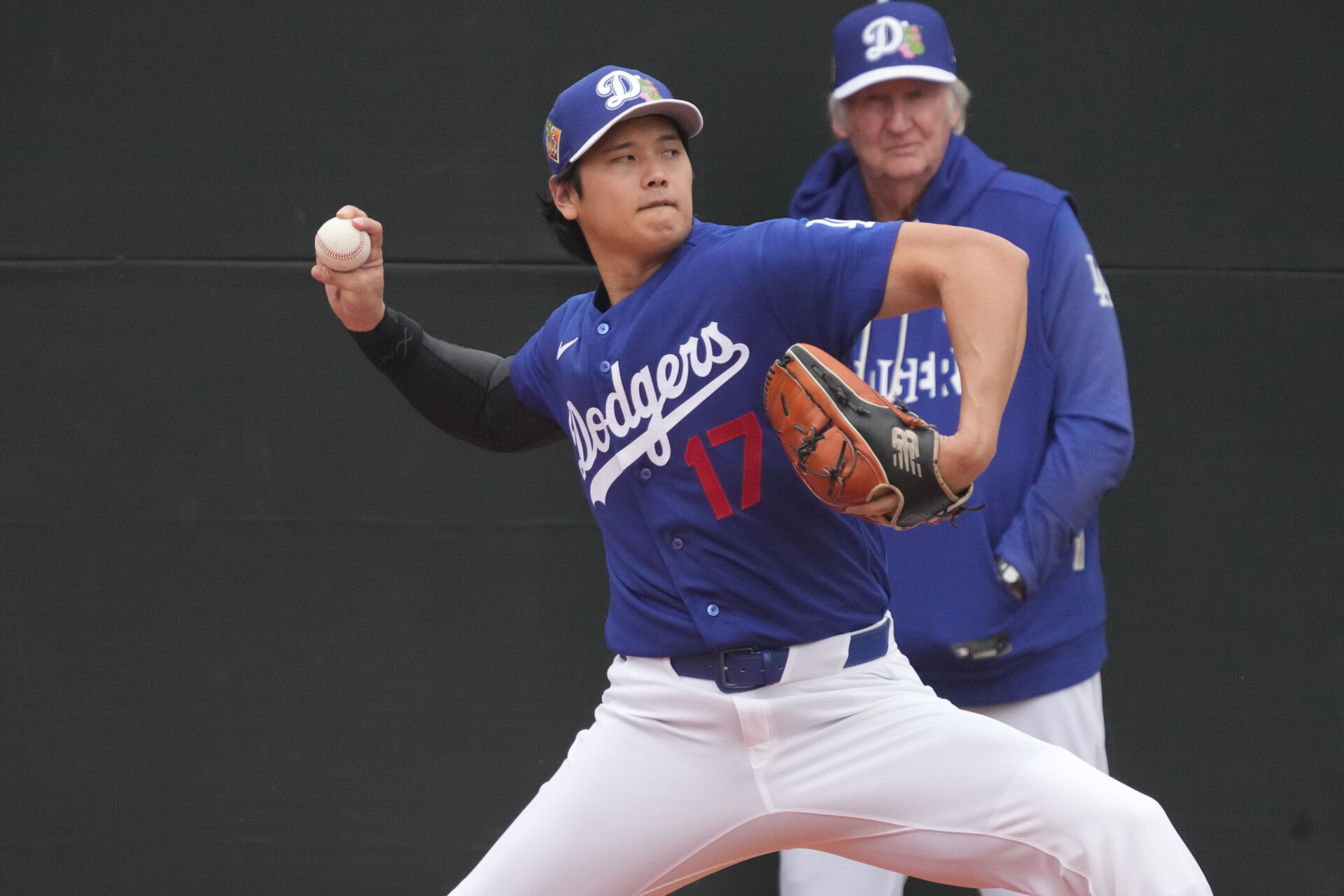
The Los Angeles Dodgers aren’t just outspending baseball anymore. They’re playing an entirely different game.
Their 2025 payroll totaled approximately $516 million when you include the record $169.4 million luxury tax bill they paid after winning their second consecutive World Series.
That figure exceeds the combined payrolls of the six lowest-spending teams in baseball, the Marlins, Athletics, Rays, White Sox, Pirates, and Guardians, who together managed just $510 million. The Dodgers’ tax payment alone was higher than what more than a dozen teams spent on their entire rosters.
And they’re not slowing down. With the January addition of Kyle Tucker on a four-year, $240 million deal, Los Angeles pushed its 2026 luxury tax payroll north of $413 million. The next closest team, the New York Mets, sits at approximately $317 million, nearly $100 million behind.
The 4.8 Problem
The gap between baseball’s haves and have-nots has never been wider. In 2025, the ratio of average payroll between the top-five and bottom-five spending teams reached 4.8. For every dollar the bottom five invested in player salaries, the top five spent $4.80. That’s the largest disparity since at least 1985, surpassing even the 4.4 ratio in 1999 that prompted MLB to implement its multi-tiered luxury tax system four years later.
So much for the competitive balance tax balancing anything.
Since 1998, teams with top-10 payrolls have won 20 of 27 World Series titles. The top-five spending clubs averaged 89 wins per season over that stretch, compared to 74 wins for the bottom five. Money doesn’t guarantee October success, but it buys a whole lot of regular-season breathing room and October tickets.
The Dodgers have turned financial dominance into something approaching dynasty. They became the first team to repeat as champions since the 1998-2000 Yankees, and they did it while obliterating spending records. They’re operating at 110% tax penalties on every dollar above $304 million, and owner Mark Walter keeps writing the checks. Their deferred salary obligations now top $1 billion, spread across payments running through 2047.
Four teams currently project payrolls above $300 million for 2026. Several have payrolls under $100 million. The Miami Marlins sit at roughly $67 million, about one-fifth of what Los Angeles is spending.
The Lockout on the Horizon
The current collective bargaining agreement expires December 1, 2026. Commissioner Rob Manfred has already begun framing the negotiation. He told reporters the “leverage associated with an offseason lockout” works “based on leverage” under federal labor law, comparing it to using “a .22, as opposed to a shotgun or a nuclear weapon.”
The MLBPA expects owners to lock them out and push hard for a salary cap. Executive director Tony Clark called any cap proposal “institutionalized collusion” at the 2025 All-Star Game. Players view it as a declaration of war.
The Dodgers make an easy boogeyman for cap proponents. Tucker’s contract will cost them $119.9 million annually when you factor in tax penalties, more than the entire 2026 payrolls of 10 teams. But the union sees it differently. In capped leagues like the NFL, NBA, and NHL, players typically receive around half of revenue. MLB players receive a comparable share, though the exact figures are disputed by the league and union.
Meanwhile, Pittsburgh has the reigning NL Cy Young winner in Paul Skenes, who posted a 1.97 ERA and 216 strikeouts last season. The Pirates’ 2025 competitive balance tax payroll was approximately $109 million. Skenes won’t reach arbitration until after the 2026 season, and everyone in the sport knows the clock is already ticking on his eventual departure. The Pirates can develop elite talent. They just can’t keep it.
That’s the fundamental tension driving everything. Small-market teams can build hope through player development, but they face immediate speculation about trading their best players the moment those players prove their value. Headlines wondering whether the Pirates would deal Skenes appeared shortly after their 2025 season ended.
The Dodgers, by contrast, just handed Tucker the second-highest average annual value in baseball history behind teammate Shohei Ohtani. They’ve signed eight players to nine-figure contracts on their current roster.
Is MLB Broken?
Whether the sport is broken depends on your definition. MLB has crowned 16 different World Series champions since 2000, more than the NBA, NFL, or NHL over that span, all of which have salary caps. The Brewers made the playoffs on a modest payroll. The Rays remain competitive despite ranking near the bottom in spending.
But those teams also face a question their fans know all too well: What happens when their homegrown stars become too expensive to keep? The answer, more often than not, is that someone else gets them. Usually the Dodgers.